
Start with a complete month-end packet
Gather the statement for every operating and reserve account, the corresponding ledger or transaction report, the prior reconciliation, deposit records, cleared-check images when available, and supporting documents for unusual activity. Use the same statement-ending date for the bank and accounting reports.
Do not treat an online bank balance as a completed reconciliation. It may exclude uncleared checks, deposits that have not posted, bank charges not yet recorded, or transactions entered in the wrong account.
- Bank statements for every association account
- Ledger or transaction detail through the statement date
- Prior-month reconciliation and unresolved items
- Deposit support, check images, invoices, and approvals
- A short list of unusual transfers, fees, or adjustments
Match cleared activity before calculating adjustments
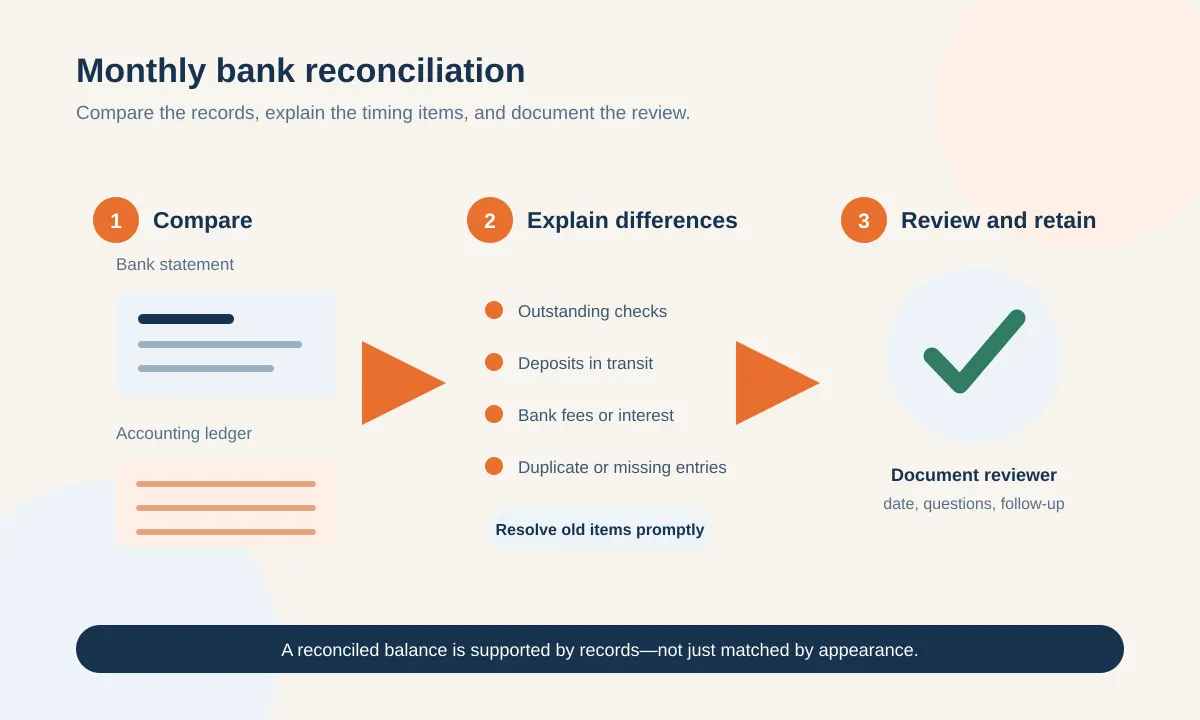
Compare deposits and withdrawals on the statement with the ledger one item at a time. Mark the items that cleared, confirm dates and amounts, and record legitimate bank fees, interest, or other activity missing from the books. Investigate duplicates or transactions posted to the wrong account rather than forcing the balances to agree.
The IRS recordkeeping guidance for businesses describes the same core control: compare statement deposits and canceled checks with the accounting records, identify differences, and prepare a reconciliation. An HOA should apply the workflow to its own account structure and professional advice.
Explain every reconciling item
Reconciling items are usually timing differences or corrections that explain why the bank statement and ledger do not initially match. List them individually with the date, amount, explanation, and owner for follow-up. Common examples include outstanding checks, deposits in transit, bank fees, interest, and recording errors.
Old items deserve attention. A check that remains outstanding for several months, a recurring unexplained adjustment, or a deposit that never appears on the statement should not simply roll forward without investigation. Follow the association’s policy and obtain accounting or legal guidance when the right treatment is uncertain.
Have someone independent review the reconciliation
When practical, the person reviewing the completed reconciliation should not be the same person who records transactions, makes deposits, or authorizes payments. Small volunteer boards may have limited staffing, but they can still assign a second board member to review the statement, reconciliation, supporting records, and unresolved items.
Government internal-control guidance emphasizes segregation of financial responsibilities and timely review of bank reconciliations. The goal is not to imply wrongdoing; it is to make errors easier to detect and to keep the association’s financial process from depending on one person.
- Confirm the statement and ledger periods match
- Verify the adjusted balances agree
- Spot-check material or unusual transactions
- Review outstanding items from prior months
- Record the reviewer, date, questions, and follow-up owner
Connect the reconciliation to the board’s financial review
Use the completed reconciliation with the balance sheet, income statement, budget-to-actual report, and general ledger. A reconciled cash balance makes those reports more useful, but it does not by itself prove that an expense was authorized, classified correctly, or appropriate for the fund used.
End with a short action log. Record corrections made, questions still open, who owns each follow-up, and the date the board expects resolution. Retain the packet according to the association’s policies and applicable requirements without placing sensitive banking or owner information in public meeting materials.
Use software to organize the work—not replace review
EasyHOA’s accounting section includes connected bank transactions, a chart of accounts, reconciliation, budgets, and financial reports. Its reconciliation page is designed to compare recorded transactions with external statements, and the reconciliation report can be printed for an audit or finance committee.
Software can make matching and documentation easier, but the board still needs to verify the records, explain differences, preserve approvals, and involve a qualified accountant or adviser when an item is unclear. Reconciliation requirements and board-review rules vary by jurisdiction and governing documents.
Sources & further reading
- IRS Publication 583: Starting a Business and Keeping Records ↗
- IRS Internal Revenue Manual: Internal Controls and Reconciliation of Books and Records ↗
- New York State Comptroller: St. Paul Boulevard Fire Association audit ↗
- National Park Service Reference Manual 32: Cooperating Associations ↗
- EasyHOA Help Center: Account Reconciliation Page ↗
- EasyHOA Help Center: August 14, 2026 feature update ↗
Keep exploring
Created with AI assistance for EasyHOA. Sources are linked above; community procedures should reflect your association’s circumstances.
← All articles