

Set the calendar and gather reliable inputs
Start early enough to review the association’s governing documents, required notice or approval steps, and the timing of vendor renewals. Requirements vary, so confirm the process that applies to your community before setting internal deadlines.
Bring together the current budget, year-to-date actuals, recent financial statements, vendor contracts, utility history, insurance information, planned maintenance, and the latest reserve study or reserve plan. Note one-time expenses separately so they do not quietly become permanent assumptions.
- Budget-to-actual results for each line item
- Known contract renewals and quoted increases
- Maintenance projects expected in the next fiscal year
- Expected reserve contributions and scheduled replacements
- Delinquencies, collection costs, and realistic income timing
Separate day-to-day operations from long-term repairs
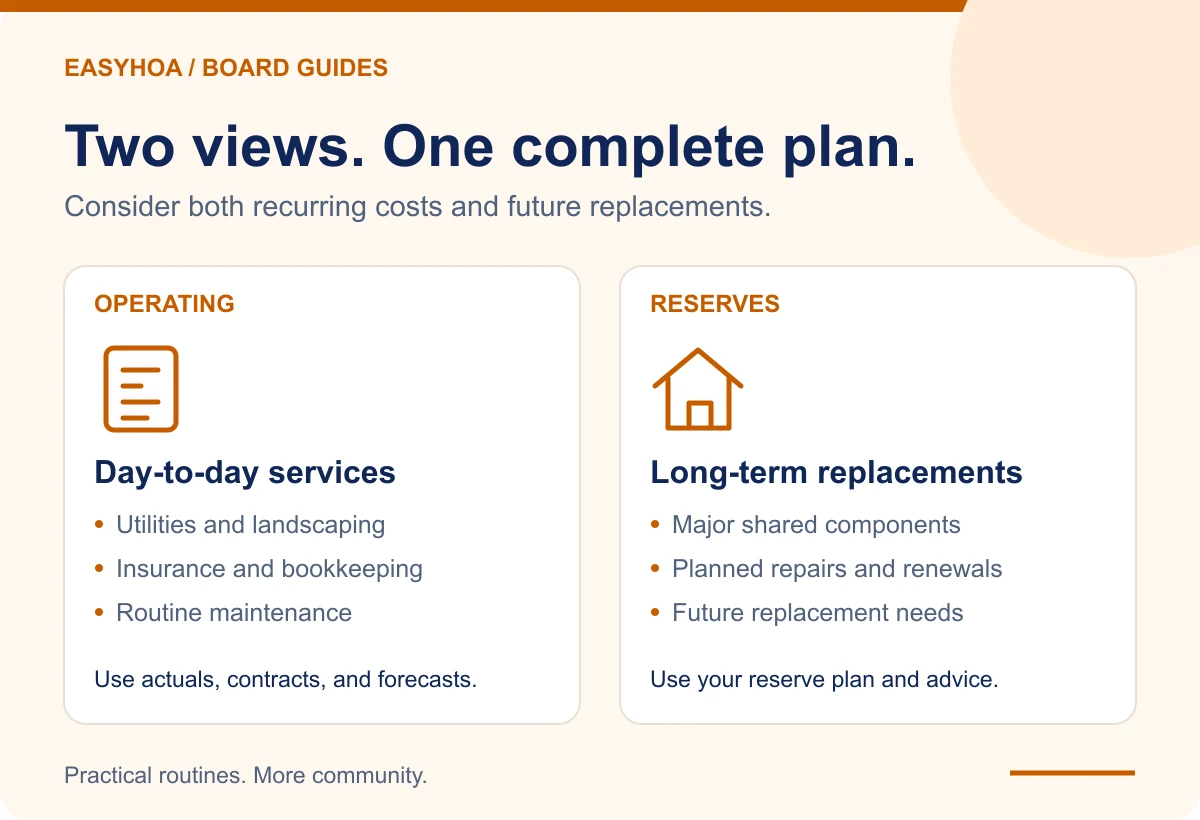
Operating expenses cover recurring work such as utilities, landscaping, insurance, bookkeeping, software, and routine maintenance. Reserve funding prepares for larger repairs and replacements that occur less often. Keeping the two views distinct helps the board see whether routine services and future capital needs are both funded.
Use the reserve study or other qualified planning advice as an input rather than treating reserves as the amount left after operating expenses. If the board is unsure where an item belongs or what level of funding is appropriate, consult the association’s accountant, reserve professional, manager, or attorney as appropriate.
Build expenses first, then test the assessment
Estimate necessary expenses before deciding what owners should pay. Compare several years of actual costs, give more weight to recent changes, and document the reason for each material increase or decrease. Add a reasonable contingency for costs that are uncertain but foreseeable.
After expenses and reserve contributions are assembled, compare the required revenue with expected assessments and other dependable income. Test the effect per home and by billing period. Do not assume every billed dollar arrives on time; reflect the association’s real collection pattern without treating late fees or unpredictable income as a dependable funding plan.
Review the draft as a board workflow
Use a work session or scheduled meeting to review the draft line by line. Identify the source for each estimate, the owner of any unanswered question, and the date the board needs a final number. Record decisions so the next revision does not reopen settled assumptions without new information.
Explain meaningful changes to homeowners in plain language. A short annotation beside a changed line item can show what changed, why it matters, and whether it affects services, reserves, or the assessment. Follow the association’s required notice and approval process.
- What service or obligation does this line support?
- What evidence supports the estimate?
- Is this recurring, seasonal, or one-time?
- Does the reserve plan already address it?
- What should owners understand about the change?
Monitor the budget after adoption
Adoption is the start of the budget cycle, not the end. Review budget-to-actual results on a consistent schedule, investigate material variances, and update the board’s forecast when a cost changes. Keep the approved budget, supporting assumptions, and board decisions together so future volunteers can understand the plan.
EasyHOA’s accounting tools include budgets, bank transaction imports, profit and loss reports, and balance sheet reports. Use the tools your board selects to create a repeatable monthly review: reconcile records, compare actual results with the budget, assign follow-up items, and report decisions to the board.
Sources & further reading
Keep exploring
Created with AI assistance for EasyHOA. Sources are linked above; community procedures should reflect your association’s circumstances.
← All articles